
How Dehumanizing Stories Lead to Our Worst Atrocities
Every act of dehumanization in history started with people telling and believing a story about someone else—one that made them seem less than human.

It’s easier than we think to become the villain in someone else’s story.
That’s not a fun thing to admit, but it’s true. You don’t have to be a narcissistic dictator or a heartless mercenary. You don’t have to be some unhinged extremist.
You just have to believe the wrong story.
Because that’s where it always starts—with a story.
Every act of dehumanization in history started with people telling and believing a story about someone else—one that made them seem less than human. And once a person is seen as something other than fully human, unspeakable evil becomes possible.
So let’s talk about how we get here, and more importantly—how we stop it.
The Power of a Story (For Better or Worse)
Stories connect us. They help us understand each other. But they can also do the opposite. They can take hold of our minds and hearts, slowly turning us into the very people we swore we’d never become.
Dehumanization doesn’t start with violence.
It starts with language.
It starts when we give a group a label—one that erases their individuality. It starts when we use metaphors that compare people to animals, diseases, or objects.
Once we believe that story, empathy goes out the window. And when empathy disappears, people are capable of unthinkable things.
As Brené Brown puts it, “People are hard to hate close up,”
The problem is, dehumanization convinces us to do the opposite. It pushes us to step back—to separate, to distance, to see people as them instead of us. Because the closer we truly get to them, the more we see our similarities and shared humanity. And for a story as radical and dangerous as dehumanization to take hold, it must isolate, distort, and—ultimately— birth an echo chamber of ignorant hatred.
And once that happens? It’s often too late.
This isn’t new.
We are not the first generation to struggle with this. Dehumanization has been behind some of the worst things humans have ever done.
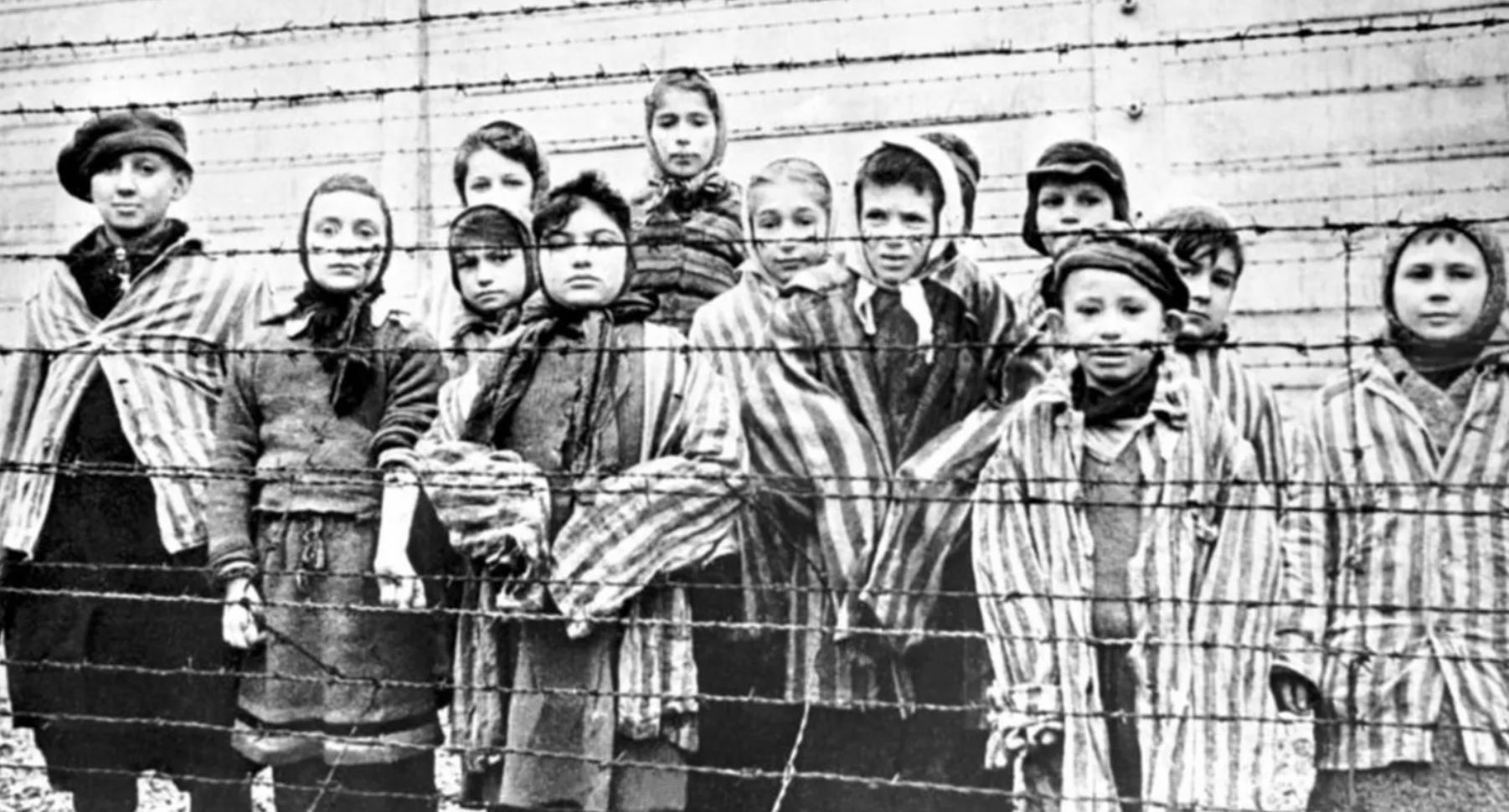
Nazi Germany
Before the Holocaust, there were stories—stories that depicted Jews as rats, disease, and threats to society. These narratives weren’t just fringe beliefs; they were in newspapers, posters, and radio broadcasts. Once people accepted them, they became capable of ignoring, excusing, or even participating in atrocities they never would have imagined.
The African Slave Trade
You can’t enslave people if you acknowledge their full humanity. That’s why the transatlantic slave trade was built on narratives that painted Africans as inferior, even subhuman. These stories weren’t whispered in secret—they were written into law, preached from pulpits, and taught in schools.
And when an entire society believes a dehumanizing story, they can justify anything.
McCarthyism in the U.S.
In the 1950s, America wasn’t rounding people up in concentration camps, but it was destroying lives based on a story. During the Red Scare, a person didn’t have to be a real communist to be treated as an enemy. They just had to be labeled one.
Fear-mongering stories made it easy to strip people of their jobs, reputations, and livelihoods.
Who Are We Dehumanizing Right Now?
I wish I could say we’ve learned our lesson, but we haven’t.
Dehumanization is still happening. Right now.
It happens in politics, in media, in everyday conversations. It happens when we reduce people to a single label. It happens when we stop seeing individuals and only see categories.
And it’s not just “those bad people over there” who do it.
It’s us. You. Me. All of us.
So here’s the hard question: Who am I on the path to dehumanizing?
Who do I instinctively dismiss? Who do I roll my eyes at? Who do I think of in caricature instead of complexity?
If we’re honest, we all have an answer.
We are all guilty.
How to Reverse Course (Before It’s Too Late)
The good news? We can choose a new story to believe.
Here’s how:
Get closer. The more we see people up close, the harder it is to dehumanize them. Read their stories. Listen to their experiences. Have conversations that challenge your assumptions.
Challenge language. If you hear someone being reduced to a single word—especially one that degrades or dehumanizes—question it. Words shape reality.
Practice empathy. If someone’s beliefs or behavior offends you, try this: Instead of asking, “What’s wrong with them?” ask, “What happened to them to make them different than me?” That small shift changes everything.
The Stakes Are High
Dehumanization makes the worst things in history possible. It also makes everyday cruelty acceptable—bullying, exclusion, discrimination, and indifference to suffering.
We are always telling stories—about ourselves, about others, about the world we live in. The only question is: Are we telling stories that humanize or dehumanize?
I don’t have all the answers to this problem. But I do know the big answer.
The big answer is to tell an alternative story that humanizes all people.
Even the ones we don’t understand, have never met or have been taught to hate.
There is an alternative story that starts and ends with love.
And you can tell it anytime you want.
I am dependent on the voluntary support or grateful readers to keep this going.
If you found this post valuable to you, please support my work in one of the following four ways:
In addition to becoming a paid subscriber, you can support my work by preordering my upcoming book, Story Is the Strategy, or by making a one-time gift via Venmo or Buy Me a Coffee.
Get closer! This! Because proximity is where the story stops being a story and starts being a person. While every act of dehumanization in history depended on keeping people at a distance, every act of genuine reconciliation required someone willing to close it. The alternative story doesn't start with better arguments, but with someone deciding to actually show up close enough to hear the real one.
I could not agree more. Though I know it’s been around forever, but it seems ever so much easier because of social media. And the deeply scary part is how easy it is. I make a concerted effort, frequently unsuccessfully, to try to see people who make my blood boil as just sad and broken rather than evil incarnate. I usually have a true moment of compassion quickly followed by how glad I am that I’m not like them - the Pharisee and the Tax Collector - where I am totally the Pharisee!! Ugh! Thanks for reframing it as the story we tell ourselves. Maybe I can become the Tax Collector for more than a moment!! Good stuff as always Joe❤️